What Is GEO: Why Isn’t Every Course Teaching It Yet?
Generative Engine Optimization (GEO) helps brands improve their visibility in AI-generated search experiences by making their content clear, relevant, trustworthy, and easy for AI systems to understand and reference. GEO does not replace SEO. Instead, it builds on search intent, content quality, authority, and technical optimization.
What Is Generative Engine Optimization (GEO)?
Generative Engine Optimization (GEO) is the process of improving a website, content, and broader brand presence so they can be understood and potentially referenced by generative AI search experiences.
Traditional search usually presents links. AI search can synthesize information from multiple sources and provide an answer with supporting links or citations. ChatGPT Search, for example, can provide answers with links to relevant web sources. Google also surfaces web content within its AI search features.
GEO therefore looks beyond traditional rankings. It considers whether information is clear, relevant, trustworthy, well-supported, and useful enough to appear in an AI-generated answer.
How Is GEO Different From SEO?
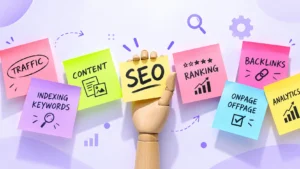
SEO focuses primarily on traditional search visibility, while GEO focuses on visibility within generative AI experiences. The two overlap heavily and should be treated as connected skills.
| SEO | GEO |
| Focuses on traditional search visibility | Focuses on generative AI responses |
| Tracks rankings, clicks, impressions, and traffic | Looks at mentions, citations, and AI visibility |
| Targets keywords and search intent | Targets questions, entities, context, and conversational intent |
| Uses content, links, and technical SEO | Builds on SEO plus content clarity and authority |
Google’s current guidance says existing SEO best practices remain relevant for appearing in its generative AI features.
So learning GEO does not mean abandoning keyword research, technical SEO, content strategy, or analytics. It means understanding how those skills apply when the search experience changes.
Why Does GEO Matter for Digital Marketers?
GEO matters because AI-powered search allows users to ask conversational questions and receive synthesized answers with sources. This changes how people can discover information, websites, and brands.
1. Search Journeys Are Becoming More Conversational
A user might ask, “What should a beginner learn before starting a digital marketing career?” instead of searching only for “digital marketing skills.” Marketers need to understand the questions behind searches.
2. Visibility Can Happen Inside an Answer
A brand may be discovered because an AI system mentions or cites its website while answering a user’s question.
3. Content Quality Matters in Context
AI search experiences need information they can interpret and combine with other sources. Clear explanations, useful evidence, and strong topical coverage can make content more useful to people and search systems.
4. Digital Marketers Need Broader Search Skills
Understanding both SEO and GEO can help learners analyze how brands are discovered across traditional and AI-driven search.
Why Isn’t GEO Part of Every Digital Marketing Course Yet?
GEO is still emerging in digital marketing education. Many courses continue to focus on established areas such as SEO, paid advertising, social media, content, email, and analytics, while AI search practices are still developing.
1. The Field is Still Evolving
AI search products, interfaces, and measurement approaches continue to change. Google added a dedicated guide on optimizing for generative AI features in Search in May 2026, showing how recently this area entered formal search guidance.
2. Traditional Foundations Still Matter
Understanding GEO is easier when learners already have a foundation in search intent, content strategy, website fundamentals, and authority.
3. GEO Is Not a Fixed Checklist
There is no single formula that guarantees inclusion in an AI answer. Learning is more useful when students analyze real queries, compare responses, inspect sources, and improve content based on observations.
4. Teaching GEO Requires Practical Training
Teaching GEO effectively means testing AI search visibility, assessing citations and mentions, improving content, and documenting changes. That is different from adding a theory-only module.
What Should an AI-Powered Digital Marketing Course Include?
An AI-powered digital marketing course should connect GEO with core marketing skills and give learners practical opportunities to test what they learn.
| Skill | What learners should practice |
| SEO fundamentals | Search intent, keyword research, on-page optimization, and technical basics |
| AI search | How AI search experiences present answers and sources |
| Content strategy | Creating useful content around real audience questions |
| Brand authority | Building credible signals through content, mentions, and digital PR |
| Measurement | Tracking search performance and AI visibility observations |
| Practical projects | Testing queries, analyzing competitors, improving pages, and documenting outcomes |
At Cvilians, we have found that learners understand GEO better when they move beyond theory, test real AI search queries, analyze the sources that appear, and apply their findings to practical digital marketing projects.
How Can You Start Learning GEO?
You can start learning GEO by building SEO fundamentals first, then testing AI search results with real questions and documenting what you learn.
Step 1: Learn SEO Fundamentals
Understand search intent, keyword research, on-page SEO, technical basics, content quality, and links.
Step 2: Understand How AI Search Experiences Work
Explore how Google AI features and ChatGPT Search present answers and sources. Focus on what users see rather than trying to guess a secret ranking formula.
Step 3: Test Real Queries Across AI Platforms
Create relevant questions, search them consistently, and record which brands, websites, and sources appear.
Step 4: Analyze Which Sources and Brands Appear
Look for patterns. Are the cited pages detailed guides, original research, product pages, or other authoritative sources? This helps you understand what information is being surfaced.
Step 5: Improve Content and Authority Signals
Make pages clearer, answer important questions directly, add useful evidence, and strengthen relevant brand signals. Avoid writing solely for AI systems.
Step 6: Track Visibility Over Time
Repeat your tests periodically. AI responses can change, so one observation should not be treated as permanent evidence.
Step 7: Document the Work As a Portfolio Project
Save the queries, observations, content changes, and results. This gives you practical evidence of your GEO skills rather than simply a definition of the concept.
Conclusion
GEO is becoming a relevant digital marketing skill as search expands beyond traditional links into AI-generated experiences. That does not make SEO outdated. It gives marketers another reason to understand search intent, content, authority, and measurement.
Not every course needs to treat GEO as a standalone specialization. However, modern training can benefit from teaching how AI search changes discovery and how established marketing skills apply to it.
For learners, the practical approach is to build strong digital marketing fundamentals, experiment with real AI search queries, and turn that work into evidence of what they can do.