What Skills Can You Build Through the Cvilians Digital Marketing Course?
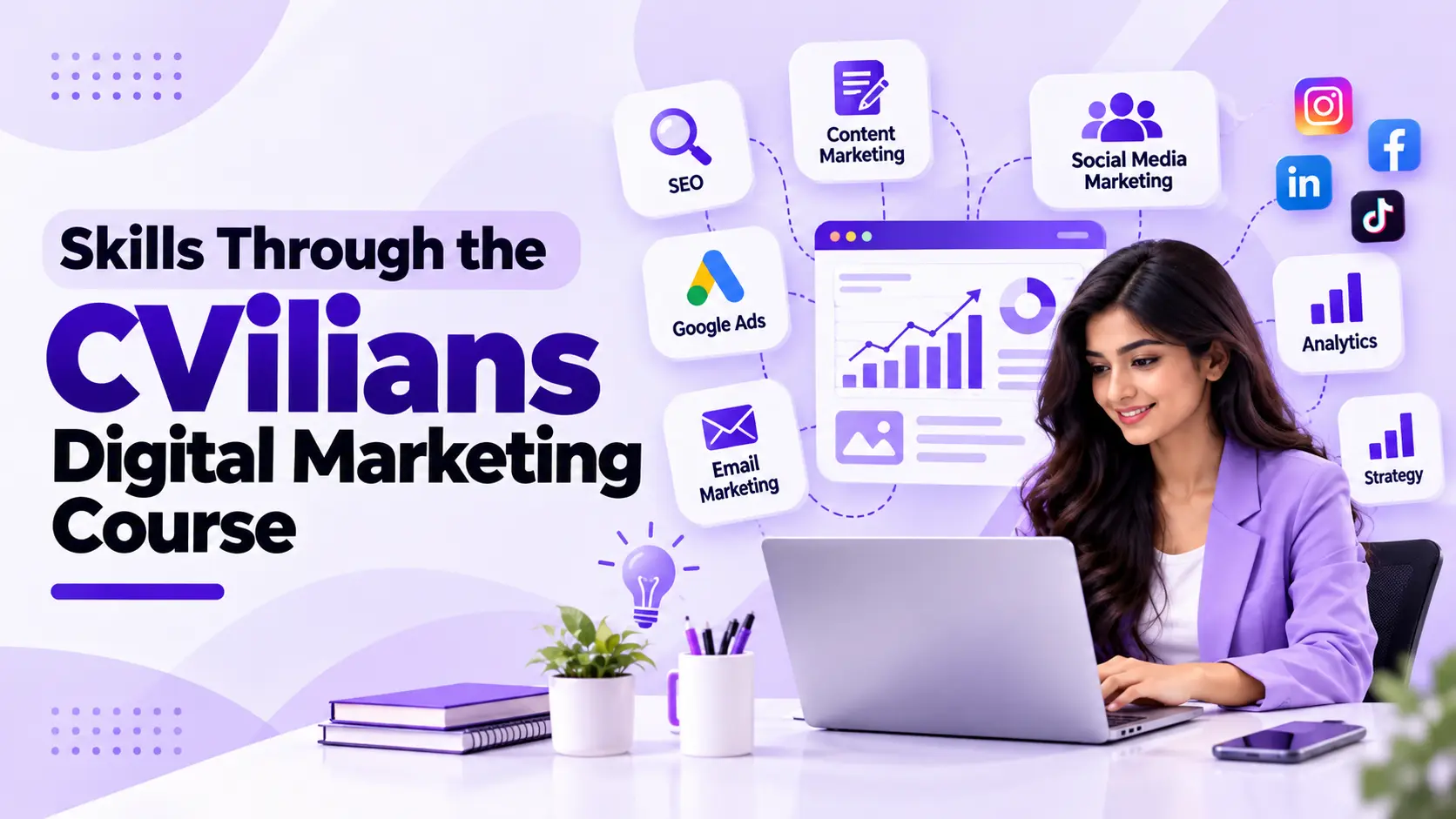
The digital marketing course at Cvilians helps learners develop practical skills across SEO, content marketing, social media, paid advertising, analytics, email marketing, AI tools, and campaign strategy. Through project-based learning, learners can practise applying these skills to marketing tasks and understand how different channels contribute to business goals.
What Is Cvilians?
Cvilians is an AI-powered digital marketing training institute that helps learners apply marketing concepts through practical projects and campaigns. Its program combines core digital marketing disciplines with AI-assisted workflows, industry tools, and mentor feedback.
Rather than treating course completion as the end goal, Cvilians emphasizes developing skills that learners can demonstrate through practical work.
This approach can help beginners understand not only what different marketing channels do, but also how to use them to address real business needs.
8 Practical Skills You Can Build Through a Digital Marketing Course
Digital marketing requires more than learning individual tools. You need to understand your audience, select appropriate channels, execute campaigns, and evaluate the results. Here are eight skill areas that can help you develop that broader understanding.
1. Search Engine Optimization (SEO)
SEO helps businesses improve their visibility in organic search results. Learning SEO means understanding how people search, how websites are structured, and how content can better meet user needs.
Practical Learnings:
- Research keywords and search intent to identify relevant content opportunities.
- Optimize titles, headings, internal links, and website content.
- Understand technical SEO basics and use search performance data to identify improvements.
Career Benefits: These SEO skills can support tasks performed by SEO executives and digital marketing associates, including keyword research, page optimization, website audits, and performance monitoring.
2. Content Marketing and Writing
Content marketing involves creating useful information that attracts an audience and supports business objectives. Strong content skills combine research, writing, audience understanding, and distribution.
Practical Learnings:
- Develop content ideas and plans based on audience needs and search intent.
- Write and optimize blogs, landing pages, and other marketing content.
- Use AI to support research and drafting while checking facts and adding original insights.
Career Benefits: These skills are relevant to content writing, content marketing, and SEO roles. They also help marketers communicate product benefits clearly across different digital channels.
3. Social Media Marketing
Social media marketing requires more than publishing posts regularly. It involves choosing suitable content formats, understanding audience behaviour, and evaluating whether content supports a campaign objective.
Practical Learnings:
- Create content calendars aligned with marketing goals.
- Develop platform-specific posts, captions, and creative ideas.
- Review engagement and other relevant metrics to identify opportunities for improvement.
Career Benefits: Social media skills can help you plan content, support brand communication, manage publishing schedules, and contribute to social media reporting.
4. Paid Advertising and Campaign Management
Paid advertising helps businesses reach selected audiences through platforms such as Google Ads and social advertising networks. Effective campaigns require clear objectives, relevant messaging, sensible budgeting, and ongoing evaluation.
Practical Learnings:
- Understand campaign objectives, audience targeting, and keyword selection.
- Develop ad copy and creative variations for different audiences.
- Learn how budgets, conversion tracking, and performance metrics inform campaign optimization.
Career Benefits: These skills provide a foundation for supporting paid media campaigns, preparing advertising assets, monitoring results, and identifying potential improvements.
5. Web Analytics and Performance Reporting
Analytics helps marketers understand what happens after a campaign launches. Instead of judging performance by traffic or likes alone, you learn to connect marketing activity with meaningful outcomes.
Practical Learnings:
- Interpret metrics such as clicks, impressions, website traffic, and conversions.
- Understand how tools such as Google Analytics 4 can help measure website activity.
- Organize findings into reports that explain performance and suggest next steps.
Career Benefits: Analytical skills help digital marketers report results, investigate performance changes, and make better-informed decisions about future campaigns.
6. Email Marketing and Lead Nurturing
Email marketing allows businesses to communicate with subscribers and potential customers through relevant, targeted messages. The skill lies in matching the message to the audience and the stage of their decision-making journey.
Practical Learnings:
- Understand audience segmentation and email campaign planning.
- Develop subject lines, email copy, and calls to action.
- Evaluate open rates, clicks, and conversions to understand campaign performance.
Career Benefits: These email marketing skills can support customer communication, lead nurturing, and retention activities. Their practical value depends on learning how to create relevant messages and measure their effectiveness.
7. AI Tools and Marketing Workflows
AI tools can assist with research, content development, brainstorming, and analysis. However, using them effectively requires marketing knowledge and the ability to evaluate their output.
Practical Learnings:
- Use AI tools to organize research, generate ideas, and support content planning.
- Develop prompts and workflows suited to specific marketing tasks.
- Verify information, refine generated content, and apply human judgment before using outputs.
Career Benefits: AI-assisted workflows can help marketers complete repetitive tasks more efficiently. The lasting skill is knowing where AI adds value without compromising accuracy, originality, or audience relevance.
8. Marketing Strategy and Problem-Solving
Marketing strategy connects individual activities to a broader business objective. It helps you understand why a campaign is needed, which channels deserve attention, and how success should be measured.
Practical Learnings:
- Identify target audiences, business goals, and suitable marketing channels.
- Plan campaign activities around measurable objectives and key performance indicators.
- Analyze results, identify problems, and prioritize improvements using available evidence.
Career Benefits: Strategic thinking helps digital marketing associates coordinate tasks across channels, explain their decisions, and contribute to campaign planning instead of simply completing assigned activities.
What’s the USP of the Digital Marketing Course at Cvilians
Cvilians combines digital marketing fundamentals with practical campaign work and AI-assisted learning. These five USPs distinguish its approach:
- Agency-powered learning: The 90-day program connects marketing education with practical work and campaign experience.
- Live client projects: Learners get opportunities to apply marketing concepts to client projects rather than relying entirely on hypothetical exercises.
- 50+ AI and marketing tools: The program includes access to 50+ AI and marketing tools, helping learners explore different workflows.
- Small learning batches: Cvilians advertises batches of five to ten learners, supporting mentor interaction and personalized feedback.
- Portfolio and placement support: Project work can help learners develop examples of their skills, while the program also includes portfolio and placement support.
These features are most valuable when learners actively participate, ask questions, document their decisions, and use feedback to improve their work.
What’s the Fees of Digital Marketing Course Cost at Cvilians
Cvilians offer a 3-month digital marketing course that costs ₹32,000, excluding GST.
| Course Detail | Information |
| Course fee | ₹32,000 + applicable GST |
| Program duration | 90 days |
| Learning approach | Practical projects and campaign-based learning |
| Mentorship | Complete mentor guidance and feedback |
| Project experience | Live client project opportunities |
| Additional support | Portfolio development and placement support |
The course combines digital marketing fundamentals with practical learning opportunities. When comparing programs, consider how much time you will spend applying concepts, the feedback you will receive, and whether you can use your completed work to demonstrate your skills.
Conclusion
Building digital marketing skills means learning how to plan, execute, measure, and improve marketing activities. SEO, content, social media, advertising, analytics, and AI workflows each contribute to that process.
At Cvilians, the focus on practical projects offers learners opportunities to apply these concepts and develop demonstrable skills. The next step is to identify your learning goals and choose a course that helps you practise the work you want to do.