How to Build a Personal Brand on Social Media: Practical Steps & Tips
To build a personal brand on social media, define your professional identity, choose the right platforms, optimize your profiles, share valuable content consistently, engage with your audience, and track your progress. The goal is to create a recognizable online presence that reflects your skills, values, and expertise.
What Is Personal Branding on Social Media?
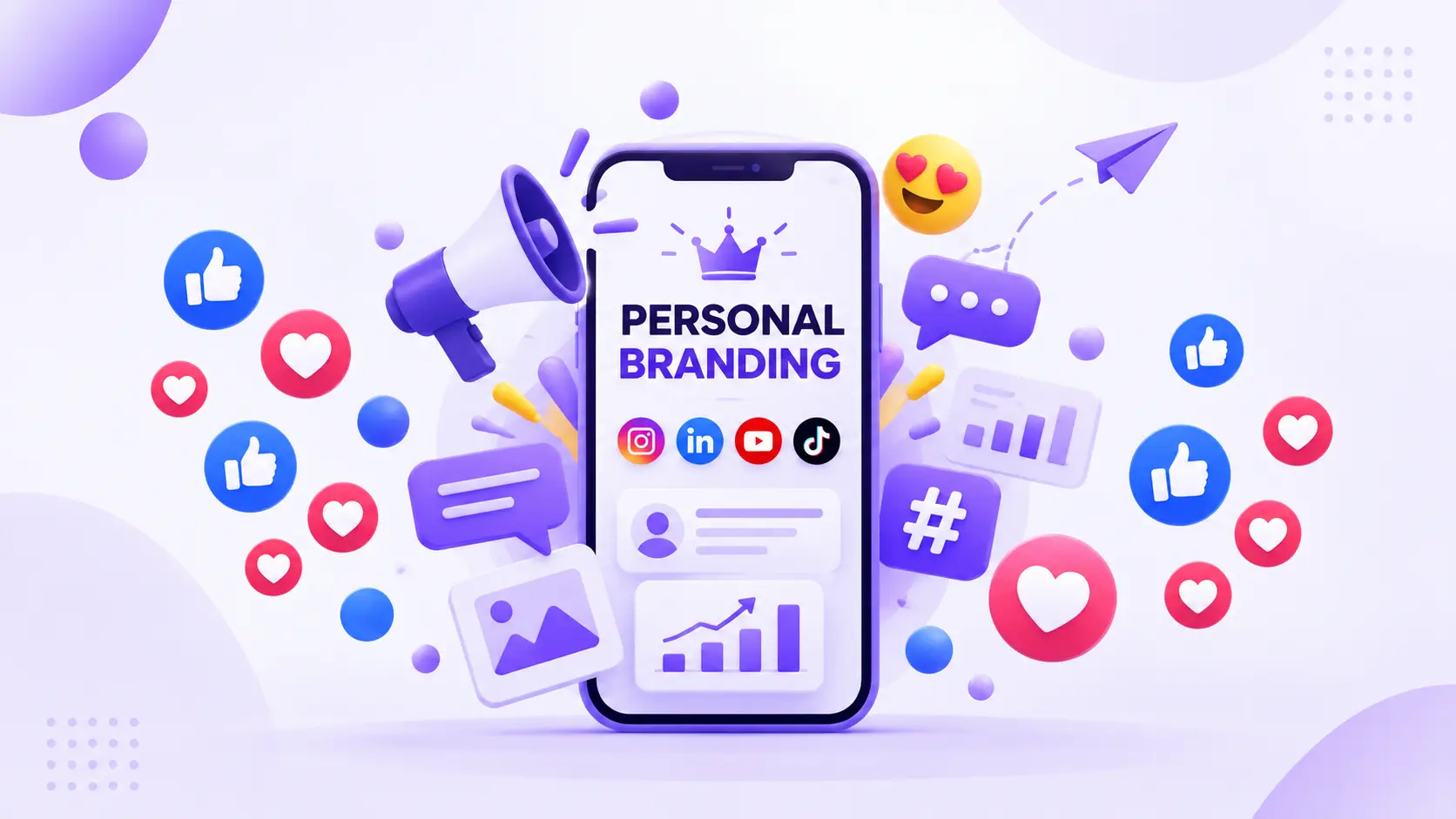
Personal branding on social media is the process of shaping how people perceive your skills, expertise, values, and personality through your online presence.
It involves sharing relevant content, presenting your achievements, and participating in professional conversations. Your social media profiles should help people understand who you are and what you offer.
For example, a digital marketing student can share SEO projects, explain marketing concepts, and discuss industry trends. These activities demonstrate practical knowledge and help build a recognizable professional identity.
Why Is Personal Branding Important for Students and Professionals?
Personal branding helps students and professionals showcase their abilities, build industry connections, and improve their professional visibility. It complements a CV by showing how individuals communicate, think, and apply their skills.
Four key benefits explain why personal branding matters.
- Better career opportunities: A professional online presence helps recruiters understand your skills, interests, projects, and career goals.
- Stronger professional networks: Sharing useful insights can help you connect with industry experts, potential mentors, and like-minded professionals.
- Greater credibility: Accurate information, useful content, and consistent communication help establish trust with your audience.
- Long-term career growth: Your personal brand can evolve as you gain experience, develop new skills, or move into a different industry.
LinkedIn recommends completing your profile and presenting your professional experience clearly. These practices help people understand your background and professional strengths.
How to Build a Personal Brand on Social Media: 6 Practical Steps
Building a personal brand starts with clarity and improves through consistent action. Follow these six steps to create an online presence that supports your professional goals.
1. Define Your Personal Brand
Identify three things before publishing content: your strengths, your target audience, and the value you want to provide.
Ask yourself:
- What skills or subjects do I understand well?
- Who would benefit from my knowledge?
- What do I want people to associate with my name?
For instance, a student interested in graphic design might focus on design principles, portfolio projects, and creative problem-solving. A finance professional might share budgeting insights, financial literacy tips, and industry developments.
Choose a clear direction without restricting yourself to a single topic forever.
2. Optimize Your Social Media Profiles
A strong social media profile explains who you are, what you do, and why people should connect with you.
Use a clear profile photograph and a professional headline. Write a concise bio that highlights your expertise, interests, or career direction.
Weak Bio: “Student and learner”
Strong Bio: “Aspiring Digital Marketer | SEO, Content Strategy & Social Media.”
Include relevant qualifications, certifications, projects, and portfolio links. Keep your professional information consistent across platforms.
Review your public posts and privacy settings regularly. Your online presence should reflect the professional image you want to build.
3. Create Valuable and Relevant Content
Valuable content demonstrates your knowledge and gives people a reason to follow you. Focus on answering questions, explaining concepts, or sharing useful lessons.
Effective personal branding content includes:
- Educational posts: Explain industry concepts in simple language.
- Project breakdowns: Show your process, decisions, and outcomes.
- Industry insights: Discuss relevant developments using credible sources.
- Learning experiences: Share genuine challenges and lessons.
- Skill demonstrations: Use short videos, examples, or portfolio posts to demonstrate your abilities.
You do not need to position yourself as an expert in every subject. Sharing what you are learning can also build credibility when your content is accurate and transparent.
4. Maintain a Consistent Posting Schedule
Consistency makes your presence easier to recognize and helps you develop a sustainable content habit. Choose a schedule you can maintain alongside your studies or work.
Start with two or three thoughtful posts per week, if that suits your available time. This is a practical starting point, not a universal algorithm rule.
Plan topics in advance, reuse ideas in different formats, and prioritize useful information over frequent but rushed updates.
5. Engage With Your Audience
Personal branding is a two-way activity. Respond to relevant comments, ask thoughtful questions, congratulate peers on genuine achievements, and contribute meaningfully to industry conversations.
Avoid leaving generic comments simply to gain visibility. A specific observation or helpful suggestion creates a better impression.
You can also connect with professionals whose work interests you. Introduce yourself naturally, explain why you value their insights, and focus on building relationships rather than immediately asking for favors.
6. Measure Your Progress and Improve
Review your performance regularly to understand which activities support your goals. Depending on the platform, useful indicators include profile visits, relevant followers, meaningful comments, saves, shares, and professional inquiries.
If your goal is employment, track conversations with recruiters and opportunities generated through your profiles. If you are building a portfolio, assess whether your content attracts people interested in your work.
Use these observations to refine your topics, formats, and posting schedule. Follower count alone does not tell you whether your personal brand is attracting the right audience.
Which Social Media Platforms Are Best for Personal Branding?
The best platform depends on your career goals, audience, and preferred content format. Start with one or two platforms where relevant people already spend time rather than trying to maintain every account.
- LinkedIn: Best for students, job seekers, professionals, consultants, and industry networking. Share career insights, achievements, projects, and professional knowledge.
- Instagram: Useful for designers, creators, photographers, marketers, and other visually oriented professionals. Use Reels, Stories, and portfolio posts to showcase your work.
- YouTube: Suitable for people who can explain subjects through tutorials, demonstrations, interviews, or longer educational videos. Its searchable video library can support long-term discoverability.
- X: Helpful for joining conversations about technology, business, research, marketing, and other professional interests. Short commentary and thoughtful discussions can help establish your perspective.
- Facebook: Can support community building through relevant groups, professional communities, local networks, and niche interests.
Choose platforms based on where your intended audience spends time. A job seeker may benefit more from a complete LinkedIn profile than from maintaining five inactive social media accounts.
Common Personal Branding Mistakes to Avoid
Strong personal branding depends on authenticity, clarity, and consistency. Avoid these five common mistakes that can weaken your online reputation.
- Trying to appeal to everyone: A broad, unfocused profile makes it harder for people to understand your expertise. Choose a few connected topics that support your goals.
- Copying other creators: Learn from successful professionals, but develop your own perspective, examples, and communication style instead of reproducing their content.
- Posting without a purpose: Before publishing, ask whether the content educates, demonstrates a skill, starts a meaningful conversation, or supports your professional identity.
- Ignoring engagement: Publishing without responding to relevant interactions misses opportunities to develop relationships and understand your audience.
- Sharing misleading or unprofessional content: Verify claims, credit original sources, protect confidential information, and review how public posts may be interpreted by future employers or collaborators.
Conclusion
Building a personal brand on social media means communicating your strengths, sharing useful knowledge, and developing trust over time.
Start by defining your goals and optimizing your profiles. Choose suitable platforms, publish relevant content, and engage with people in your industry.
You do not need thousands of followers to build a credible personal brand. A strong profile, a relevant portfolio, and meaningful professional connections can create valuable opportunities.
For students and professionals looking to strengthen their career prospects, Cvilians helps develop practical digital marketing skills, including social media marketing and the best social media tools. Build your personal brand, showcase your expertise, and take the next step in your career.