Online vs. Offline Digital Marketing Courses: Which Learning Format Works Better?
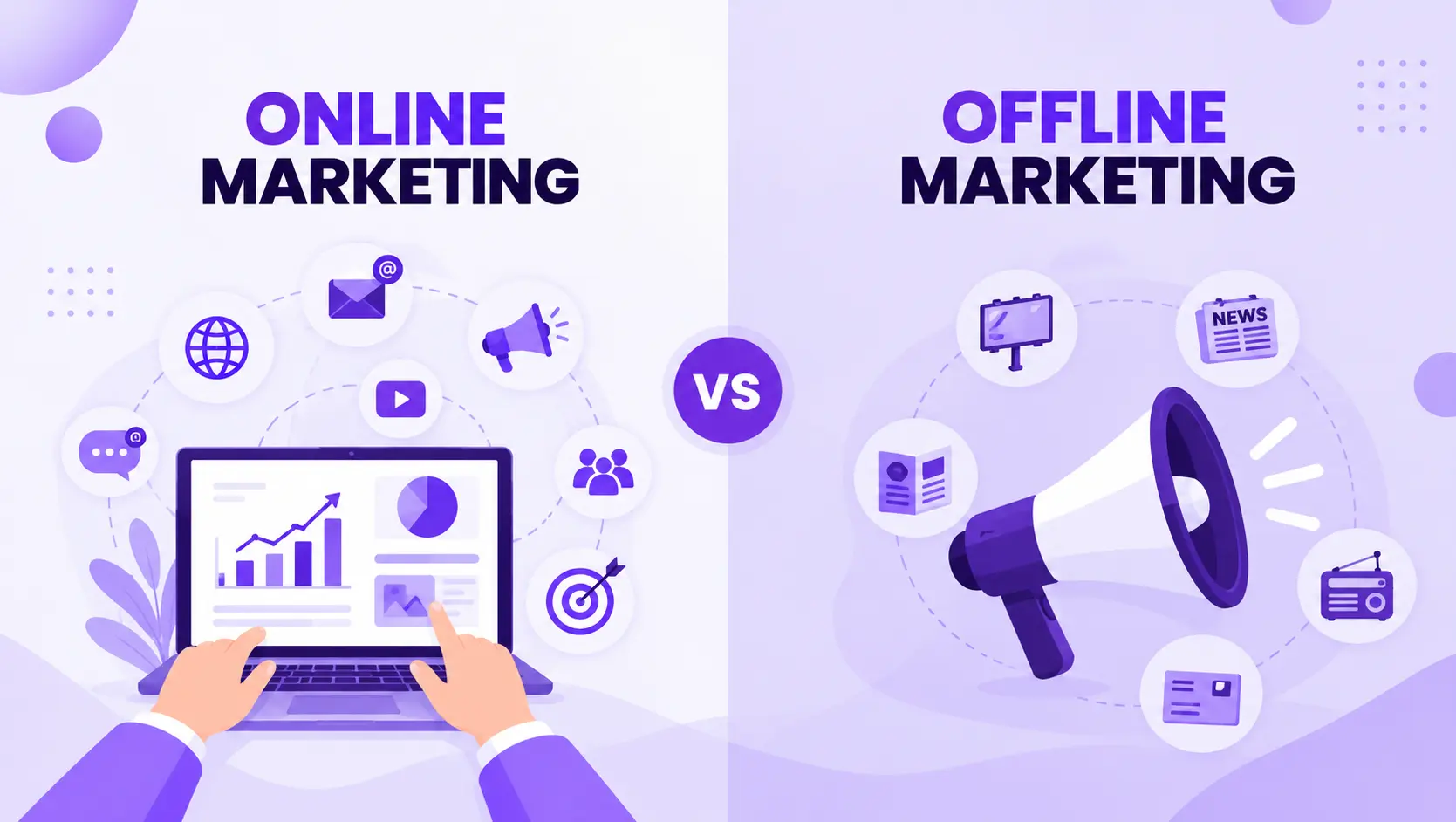
Online digital marketing courses offer flexibility and location independence, while offline courses provide face-to-face interaction and a structured classroom environment. The better choice depends on your schedule, learning preferences, budget, and access to practical training. Before enrolling, compare the projects, mentor feedback, and career support each course provides.
Online vs Offline Digital Marketing Courses: Key Differences
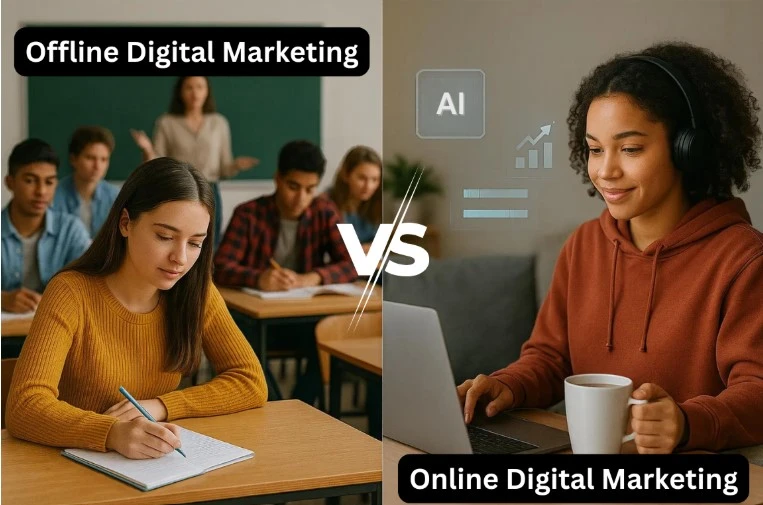
Online and offline digital marketing courses teach similar skills but deliver lessons differently. Online courses may offer live classes, recorded lessons, or a combination of both. Offline courses generally involve attending in-person classes at a training centre or institute.
| Factor | Online Course | Offline Course |
| Flexibility | Often easier to fit around other commitments | Usually follows a fixed schedule |
| Instructor interaction | Depends on live sessions and mentor access | Face-to-face interaction is possible |
| Practical training | Projects can be completed using online tools and platforms | Classroom exercises and practical projects may be available |
| Cost | May reduce commuting and accommodation expenses | Travel and accommodation may add to costs |
| Networking | Online communities and virtual group projects | In-person discussions and peer collaboration |
| Discipline | Requires independent time management | A fixed routine may help maintain consistency |
| Career preparation | Depends on projects, feedback, and portfolio development | Depends on the same factors, not just classroom attendance |
Neither format automatically produces better results. A live online course with practical assignments can offer strong learning support, while an offline course focused mainly on lectures may provide limited opportunities to apply skills.
Pros and Cons of Online Digital Marketing Courses
Online digital marketing courses suit students, working professionals, and career changers who need flexibility. However, the learning experience depends on how the course is designed and how actively learners participate.
Pros of Online Digital Marketing Course
- Flexible learning: Live sessions, recordings, and online resources can make it easier to balance training with college, work, or other responsibilities. The available flexibility depends on attendance requirements and course schedules.
- Location independence: You can learn from home without travelling to a training centre. This is useful when suitable digital marketing institutes are not available nearby.
- Access to digital tools: Online learners can practise keyword research, website analysis, advertising, and reporting using relevant platforms. Live demonstrations and mentor-reviewed assignments can make these activities more effective.
Cons of Online Digital Marketing Course
- Requires self-discipline: Learning from home can make it easier to postpone assignments or lose focus. Courses with regular live sessions, deadlines, feedback, and mentor interaction can help learners stay accountable.
Pros and Cons of Offline Digital Marketing Courses
Offline digital marketing courses provide a classroom environment where learners can interact with instructors and peers directly. This structure may benefit people who prefer scheduled learning and in-person discussions.
Pros of Offline Digital Marketing Courses
- Direct instructor interaction: You can ask questions during class and discuss difficult concepts face-to-face. The quality of support still depends on instructor availability and batch size.
- Structured learning routine: Fixed class timings create a regular schedule. This can help beginners stay consistent and move through topics in a planned sequence.
- Peer learning and networking: Classroom discussions and group assignments allow learners to exchange ideas, work together, and learn from different approaches to marketing problems.
Cons of Offline Digital Marketing Courses
- Less scheduling flexibility: Fixed class timings may conflict with college, work, or personal commitments.
- Additional travel costs: Commuting takes time and may increase the total cost of training. Learners moving to another city may also need to account for accommodation.
- Limited local options: Suitable courses may not be available nearby. Also, attending a classroom does not guarantee hands-on training, individual feedback, or better career outcomes.
Which Learning Format Is Better for Practical Digital Marketing Training?
Both online and offline courses can provide practical digital marketing training. The important difference is whether learners apply concepts, receive feedback, and understand how to improve their work.
Before enrolling, check whether the course includes:
- Hands-on projects: Opportunities to work on website audits, content plans, SEO tasks, advertising campaigns, or analytics reports.
- Mentor feedback: Reviews that explain what needs improvement and why.
- Relevant tools: Practice with platforms used in digital marketing, rather than demonstrations alone.
- Portfolio development: Work samples that help demonstrate your skills to potential employers or clients.
Cvilians emphasizes practical learning through real campaign work, mentor guidance, and projects connected to marketing activities. Its approach to campaign-based digital marketing training illustrates why applied experience deserves attention when comparing courses.
Online vs Offline Digital Marketing Course Fees
Online digital marketing courses may cost less overall when they eliminate regular travel or accommodation expenses.
However, online learning isn’t always cheaper, and offline training is not necessarily more expensive. Fees depend on the provider, course duration, curriculum, and level of support.
For example, Cvilians 3-month digital marketing course costs ₹32,000 (excluding GST).
Compare the complete cost before making a decision:
- Tuition fees: Check what the advertised price includes, such as classes, recordings, assignments, and assessments.
- Travel and accommodation: Include commuting expenses and any additional living costs for classroom attendance.
- Tools and campaign budgets: Ask whether software, premium subscriptions, or advertising spend require separate payment.
- Mentoring and career support: Understand whether individual feedback, portfolio reviews, and interview preparation are included or charged separately.
A lower fee is not necessarily better value. A more expensive course may offer useful practical support, but only if those features match your learning needs and goals.
Which Digital Marketing Course Format Should You Choose?
The right digital marketing course format depends on your daily routine, preferred learning environment, and ability to practise independently. Use the following guidelines to narrow your options.
Choose an Online Digital Marketing Course When:
- You need to balance learning with college, work, or family responsibilities.
- You want to learn without travelling to another location.
- You can manage deadlines and practise consistently on your own.
- The course offers live instruction, practical projects, and accessible mentor support.
Choose an Offline Digital Marketing Course When:
- You learn better through face-to-face discussions and demonstrations.
- A fixed timetable helps you maintain discipline.
- You value in-person group activities and networking.
- You can attend classes regularly without excessive travel or disruption.
A hybrid course may also be worth considering if it combines convenient online learning with meaningful in-person workshops or practical sessions. Evaluate the actual teaching and support provided rather than choosing a format based on its label.
What Should You Check Before Choosing a Digital Marketing Course?
Before choosing a digital marketing course, evaluate what you will learn and what you will be able to do after completing it. These checks can help you compare providers more objectively.
- Curriculum: Does it cover relevant skills such as SEO, content marketing, social media, paid advertising, and analytics?
- Practical assignments: Will you work on projects that require you to apply what you learn?
- Instructor experience: Can instructors explain concepts using relevant professional examples?
- Feedback and mentorship: Will someone review your work and help you correct mistakes?
- Tools and portfolio: Will you practise using relevant platforms and create work samples?
- Fees and policies: Are additional costs, attendance requirements, and refund terms clearly explained?
- Career support: Does the course offer portfolio guidance, interview preparation, or placement assistance? Check exactly what is included instead of assuming that support guarantees a job.
Use the same criteria to evaluate any provider, including the opportunity to attend a demo class or speak with previous learners.
Conclusion
So, which is better: an online or offline digital marketing course? Online learning is often a better fit for people who need flexibility and can manage their time independently. Offline learning may suit those who prefer classroom structure, face-to-face guidance, and in-person collaboration.
However, the learning format matters less than the quality of training, practical experience, and feedback you receive. Before enrolling, compare the curriculum, projects, mentoring, total cost, and career support.
If you are looking for practical digital marketing education that connects concepts with real campaign work, Cvilians is one option to explore. Choose a course that helps you build demonstrable skills, not just complete lessons or earn a certificate.