What Is Content Marketing? Why It’s a Crucial Skill to Learn in 2026
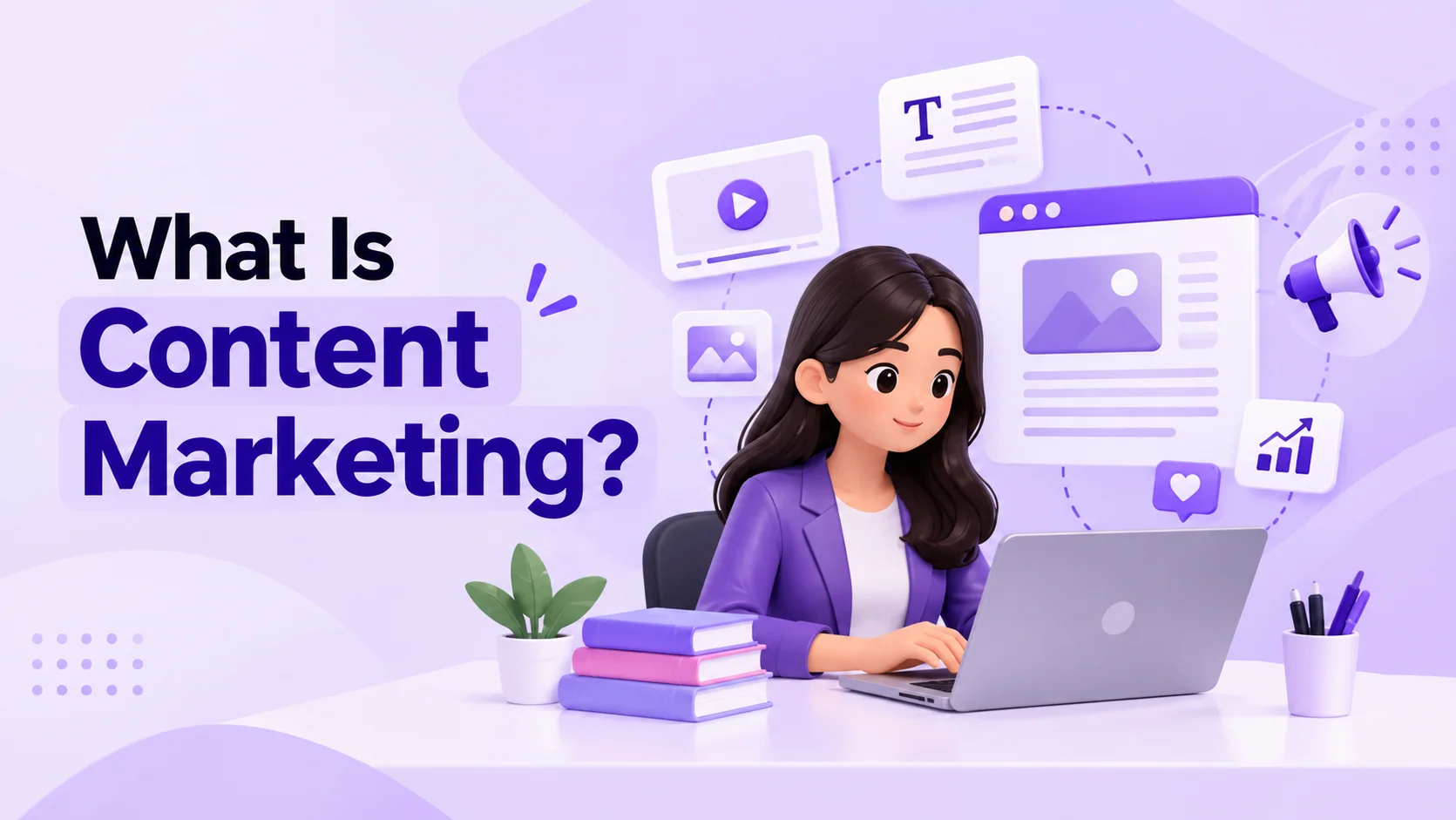
Content marketing is the process of creating and distributing useful content to attract, educate, engage, and retain a target audience. In 2026, it is an important digital marketing skill because content supports search, social media, email, websites, and newer AI-powered discovery experiences.
What Is Content Marketing?
Content marketing is a marketing approach that uses useful content to build relationships with a specific audience and support business goals. Instead of promoting a product in every message, it gives people information that helps them understand a problem, evaluate options, or make a decision.
A content marketing strategy can include blog posts, videos, social media posts, emails, guides, case studies, podcasts, and other formats. The format changes according to the audience, platform, and purpose.
For example, a skincare brand could publish a guide explaining how to choose products for different skin types. The content can attract people who are researching a problem, while product pages and other marketing activities help them move closer to a purchase.
Effective content marketing starts with the audience, not the content calendar. Marketers need to understand what people want to know, where they look for information, and what action the business wants them to take.
What Are the Main Types of Content Marketing?
Types of content marketing include written, visual, video, audio, and interactive content, with each format serving a different audience need or marketing objective.
| Content type | Common purpose |
| Blog posts | Educate audiences and support organic search |
| Videos | Explain ideas and increase engagement |
| Social media content | Build reach, interaction, and awareness |
| Email content | Nurture existing audiences and leads |
| Case studies | Demonstrate expertise and real outcomes |
| Guides and ebooks | Provide deeper education and support lead generation |
| Podcasts and webinars | Build expertise and audience relationships |
The right content mix is not necessarily the one with the most formats. Choose formats based on where the audience spends time and what helps answer its questions.
Why Is Content Marketing Important for Businesses?
Content marketing is important because it helps businesses attract audiences, build trust, support other marketing channels, and guide potential customers toward useful next steps.
1. It Builds Visibility
Useful content can help a business reach people who are searching for answers, researching products, or exploring a topic.
2. It Supports SEO
Well-planned content can target relevant topics and search queries while giving search engines useful context about a website. Google recommends creating helpful, reliable, people-first content rather than content made primarily to manipulate rankings.
3. It Builds Trust
Detailed explanations, original insights, case studies, and clear information can help a brand demonstrate expertise before someone contacts the business.
4. It Supports Multiple Channels
One strong topic can become a blog post, short video, email, social post, or downloadable resource, giving marketers more ways to reach the same audience.
5. It Can Support Conversions.
Content can answer objections, explain products, compare options, and help prospects understand what to do next. Its role is not limited to generating website traffic.
What Content Marketing Skills Do You Need in 2026?
Content marketing skills in 2026 go beyond writing. Marketers need to understand audiences, search behavior, content formats, distribution, analytics, and how AI fits into the workflow.
1. Audience and topic research
You need to identify customer questions, pain points, search intent, and topics that are genuinely useful to the target audience.
2. Content writing and storytelling
Clear writing helps turn research into content that people can understand and remember. Different formats also require different writing styles.
3. SEO fundamentals
Content marketers should understand keywords, search intent, internal linking, on-page optimization, and how content fits into a broader search strategy.
4. Analytics and measurement
Knowing how to interpret traffic, engagement, leads, conversions, and content performance helps marketers decide what to improve rather than relying on assumptions.
5. AI-assisted content workflows
AI tools can support research, ideation, outlining, editing, and repurposing, but marketers still need to review accuracy, add useful context, and apply human judgment.
In 2026, content marketers also need to understand how content can be discovered through AI search experiences.
What Career Roles Use Content Marketing Skills?
Content marketing skills are useful across digital marketing roles because businesses need people who can research audiences, create content, distribute it, and measure results.
Common roles include:
- Content Marketing Executive
- Content Writer
- SEO Content Specialist
- Content Strategist
- Digital Marketing Executive
- Social Media Executive
- Copywriter
- SEO Executive
The skill set can also strengthen broader digital marketing work. For example, an SEO professional needs content knowledge to plan pages around search intent, while a social media marketer needs content skills to create posts that fit a platform and audience.
How Can Beginners Start Learning Content Marketing?
Beginners can learn content marketing by combining foundational concepts with repeated practice on realistic projects rather than trying to master every content format at once.
Step 1: Learn how audiences think: Start with customer needs, search intent, pain points, buying stages, and the questions people ask.
Step 2: Learn content formats: Understand when to use blogs, videos, social posts, emails, guides, case studies, and other formats.
Step 3: Learn research and SEO: Practice keyword research, topic selection, content briefs, search intent analysis, and basic on-page SEO.
Step 4: Create and distribute content: Build a small content plan and produce different pieces for a defined audience. Learn how the same idea can be adapted for different channels.
Step 5: Measure and improve: Review performance data, identify what worked, and improve future content. This turns content creation into a marketing process rather than a writing exercise.
For digital marketing students, practical projects are especially useful because they show how research, content, SEO, distribution, and measurement connect. Learning these skills together can make content marketing easier to understand and apply in real marketing work.
Conclusion
Content marketing is more than writing blogs or posting on social media. It is a structured way of using useful content to attract audiences, build trust, support marketing channels, and help people make informed decisions.
Learning content marketing in 2026 also means developing skills beyond writing. Audience research, SEO, analytics, distribution, and responsible use of AI all play a role in modern content work. For beginners building a digital marketing skill set, learning how these pieces work together can create a practical foundation for working across multiple marketing roles.