ChatGPT vs Gemini vs Claude: Which Is Best for Digital Marketing?
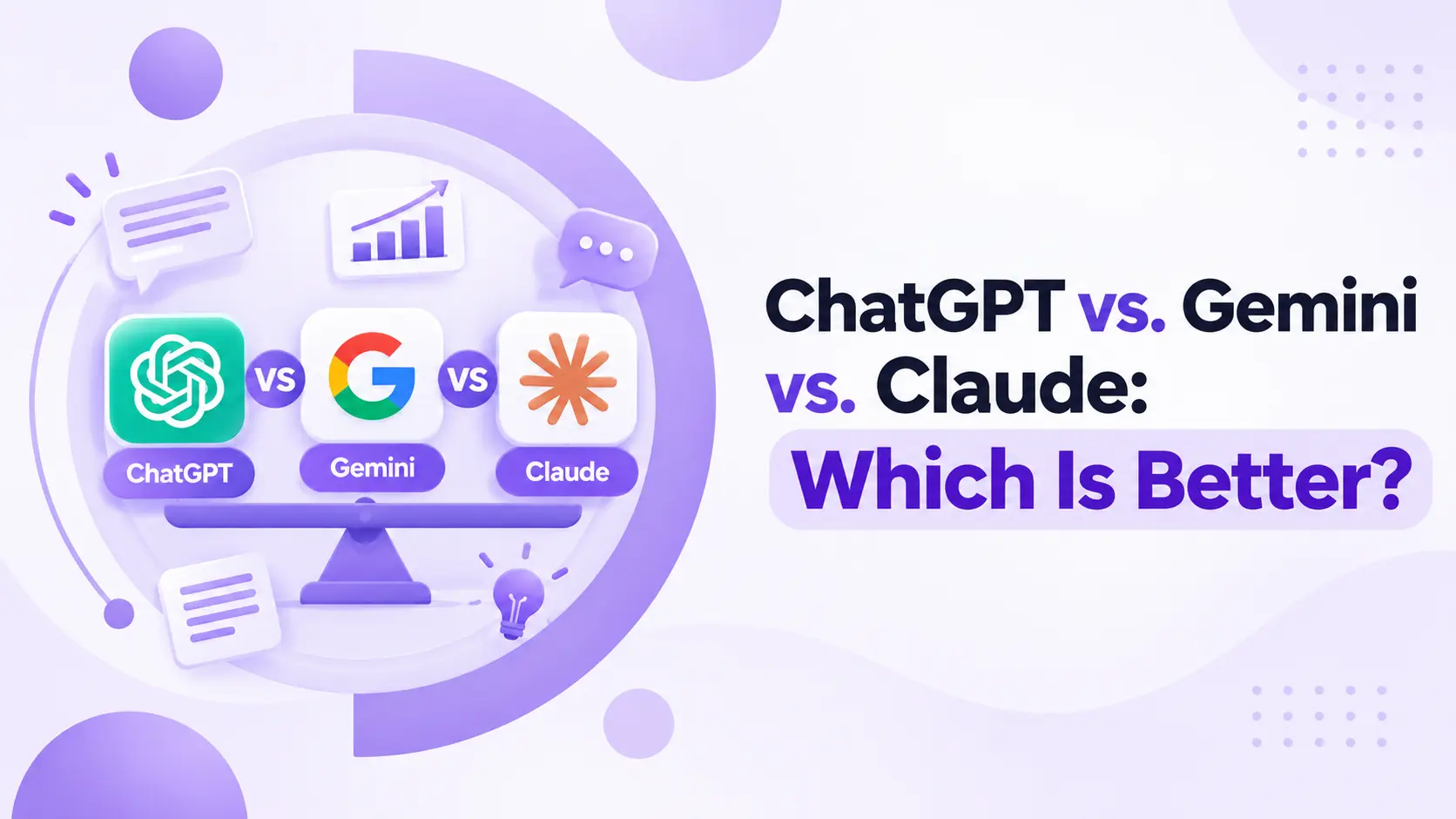
ChatGPT, Gemini, and Claude can all support digital marketing, but they have different strengths. For this comparison, ChatGPT is the strongest overall choice for content creation; Gemini stands out for research and Google-connected marketing workflows. Claude is particularly strong for detailed planning, structured writing, and long-form work. The right choice still depends on the task.
ChatGPT vs Gemini vs Claude: Key Differences
ChatGPT, Gemini, and Claude are general-purpose AI assistants that can help marketers with research, content, analysis, planning, and campaign work. Their differences become clearer when you use them for specific marketing workflows rather than simple questions.
ChatGPT
ChatGPT is a versatile option for marketers who move between several tasks in one workflow. It can support writing, research, file analysis, data analysis, charts, and web-based research. OpenAI says Deep Research can gather and synthesize information from multiple online sources and produce structured, cited reports. Its data-analysis tools can also work with spreadsheets and create charts.
Gemini
Gemini is especially relevant to marketers working heavily within Google’s ecosystem. Its Deep Research capabilities can combine web information with uploaded files and Google Workspace sources such as Gmail, Drive, Docs, Sheets, and Chat. Google has also expanded Gemini’s role across advertising and Search, making it relevant to marketers using Google products.
Claude
Claude is built strongly around detailed knowledge work, writing, reasoning, and structured outputs. Anthropic’s current Claude lineup includes models designed for knowledge work and agentic tasks, while Claude’s Projects and Artifacts features support working with reference material and creating editable outputs.
ChatGPT vs Gemini vs Claude for Digital Marketing Tasks
A useful comparison starts with what a marketer actually needs to accomplish.
1. Content Creation
ChatGPT: ChatGPT is strong for turning a rough idea into a brief, outline, draft, social post, email, or multiple content variations. It is also useful when the same idea needs to be adapted for different channels.
Claude: Claude is strong for detailed briefs and long-form writing where maintaining context, structure, and tone matters. Its Projects feature can keep relevant instructions and reference material together for repeated work.
Gemini: Gemini can brainstorm, write, edit, and refine content, including through its Canvas workspace. It is useful when content creation is connected to research and other Google-based workflows.
Winner: ChatGPT. For a broad digital marketing content workflow, ChatGPT offers the most flexible combination of ideation, drafting, rewriting, research, and file-based work.
2. Social Media Marketing
ChatGPT: It can generate content ideas, captions, hooks, content calendars, campaign variations, and platform-specific rewrites. It is particularly useful for producing several versions of the same message.
Claude: Claude can help develop campaign themes, refine brand messaging, and turn detailed briefs into structured social content. Its strength is useful when the marketer provides substantial brand context.
Gemini: Gemini can support brainstorming and content creation, while its Google ecosystem connections can be useful when social planning involves documents, files, or other Workspace material.
Winner: ChatGPT. Its flexibility across short-form copy, repurposing, ideation, and iterative prompting makes it a practical choice for everyday social media workflows.
3. Research & Analysis
ChatGPT: ChatGPT’s Search and Deep Research features can gather information, compare sources, and create structured reports with citations. It can also analyze uploaded spreadsheets and produce charts.
Claude: Claude can handle detailed research and knowledge-work tasks, with newer models adding stronger agentic capabilities, browser use, and tool use.
Gemini: Gemini Deep Research is designed for long-form research and can combine public web information with private sources. Google has also added native visualizations to its Deep Research experience.
Winner: Gemini. For marketers already working across Google Search, Workspace, and related sources, Gemini’s research and ecosystem integration give it a practical edge for research-heavy workflows.
4. Planning & Strategy Building
ChatGPT: ChatGPT can turn campaign goals into audience ideas, messaging frameworks, content plans, channel strategies, and testing ideas. Deep Research can add sourced market information when the strategy requires external evidence.
Claude: Claude is useful for working through detailed briefs, organizing complex information, developing structured plans, and refining strategic documents. Its long-context capabilities are particularly useful when a strategy includes substantial reference material.
Gemini: Gemini can support planning and research, especially when marketers need to combine web research with information stored in Google Workspace.
Winner: Claude. For detailed marketing strategy documents, Claude’s strength in structured knowledge work and handling large amounts of context makes it a strong fit for this task.
5. SEO & Content Optimization
ChatGPT: ChatGPT can help with keyword clustering, search-intent mapping, content briefs, title variations, FAQs, internal-linking ideas, and content audits when relevant data is supplied.
Claude: Claude can review detailed content, identify gaps, improve structure, and follow extensive editorial guidelines across a large document or project.
Gemini: Gemini can support content research and optimization, particularly when the workflow involves Google’s broader ecosystem and current web information.
Winner: ChatGPT. For an end-to-end SEO content workflow, its combination of research, analysis, writing, and structured file handling makes it the most versatile of the three.
6. Digital Advertising
ChatGPT: ChatGPT can help generate ad copy, audience hypotheses, creative variations, campaign structures, and testing ideas. It can also analyze campaign data when marketers provide the relevant files.
Claude: Claude can develop detailed messaging frameworks, positioning options, and creative concepts from a structured campaign brief.
Gemini: Gemini has a particularly relevant connection to Google’s advertising ecosystem. Google says Gemini is being used to power new advertising experiences across Search and AI Mode, alongside other Google Ads developments.
Winner: Gemini. For marketers focused on Google advertising, Gemini has a direct ecosystem advantage because Google is integrating Gemini into its advertising products and workflows.
ChatGPT vs Gemini vs Claude: Which Should Marketers Use?
There is no single tool that needs to replace the other two. A marketer can use ChatGPT for everyday content and SEO workflows, Gemini for research and Google-centered work, and Claude for detailed strategy documents and long-form knowledge work.
For students learning digital marketing, the most useful approach is to understand how these tools fit into real campaigns rather than learning only how to write prompts. At CVilians, students can practice applying AI tools across real digital marketing workflows, including content, SEO, social media, research, and campaign planning.
The best choice also depends on access, plan limits, integrations, data requirements, and the marketer’s existing workflow. AI should support marketing judgment, not replace keyword data, customer research, campaign performance data, or human editing.
Conclusion
ChatGPT, Gemini, and Claude are all capable AI tools for digital marketing, but their strengths differ by task. ChatGPT leads this comparison for content, social media, and SEO workflows; Gemini stands out for research and Google advertising; Claude is particularly useful for detailed planning and structured long-form work.
Marketers should test each tool against the specific tasks they perform every week. A useful workflow may involve more than one tool, with human review remaining part of the process.