Can You Get a Digital Marketing Job Without a Degree?
Quick Answer: Yes, you can get a digital marketing job without a traditional college degree. Many digital marketing employers care about what you can actually do, including how well you use marketing tools, solve problems, and apply digital marketing concepts.
A degree can still be useful for some companies and roles, but it isn’t the only way to demonstrate that you’re qualified.
If you can show that you know how to perform keyword research, optimize content, analyze campaigns, manage social media, run paid campaigns, or improve website performance, you have something employers can evaluate.
The bigger question is: “How do you prove your skills without a degree or work experience?”
That’s where practical projects, a strong portfolio, certifications, and relevant training can make a difference.
What Digital Marketing Skills Do You Need to Get Hired?
You don’t need to master every area of digital marketing before applying for your first job. However, you should have a solid understanding of the skills relevant to the role you’re targeting.
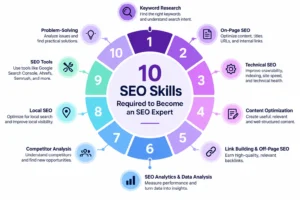
1. Search Engine Optimization (SEO)
Learn how search engines work and how to improve a website’s visibility through:
- Keyword research
- On-page SEO
- Technical SEO basics
- Internal linking
- Content optimization
- Link building
- Google Search Console
- Google Analytics
For an entry-level SEO position, being able to identify problems and explain how you’d fix them can be more valuable than simply knowing SEO terminology.
2. Content Marketing
Digital marketers need to understand how content attracts and converts an audience.
You should know how to:
- Research topics and search intent
- Create content briefs
- Write or edit SEO-friendly content
- Build content strategies
- Measure content performance
3. Social Media Marketing
Understand how businesses use platforms such as Instagram, Facebook, LinkedIn, and YouTube to reach their target audience.
This includes content planning, audience research, engagement, analytics, and basic paid social advertising.
4. Paid Advertising
A basic understanding of platforms such as Google Ads and Meta Ads can open up additional career opportunities. You should understand concepts such as:
- Keywords and targeting
- Ad copy
- Campaign structure
- Budgets
- Conversion tracking
- Cost per click
- Return on ad spend
5. Analytics and Reporting
Employers want marketers who can understand whether their work is actually producing results. Learn how to read metrics such as:
- Traffic
- Clicks
- Impressions
- CTR
- Conversions
- Conversion rate
- Cost per acquisition
You don’t have to be a data scientist. You need to be comfortable using data to make marketing decisions.
6. AI and Digital Marketing Tools
AI is becoming part of everyday marketing workflows. Learning how to use AI tools for research, ideation, analysis, content workflows, and productivity can give beginners an additional advantage.
The key is to use AI to improve your work rather than relying on it to do the entire job.
What Matters More Than a Degree in Digital Marketing?
A degree can demonstrate that you completed formal education, but it doesn’t necessarily demonstrate that you know how to execute a digital marketing campaign.
For many entry-level digital marketing roles, employers may also look at:
Practical Skills
“Can you actually perform the tasks required for the role?” Knowing what keyword research is isn’t the same as being able to conduct keyword research and turn it into a content plan.
Portfolio
A portfolio gives employers something concrete to review. Instead of saying “I know SEO,” you can show an SEO audit, keyword research project, optimized article, or website you’ve worked on.
Certifications
Relevant certifications can demonstrate that you’ve invested time in learning specific tools or concepts. However, certifications work best when they’re combined with practical experience.
Results
Even small projects can demonstrate results. For example, if you optimized your own website and increased its organic clicks, rankings, or conversions, document the process and results.
Communication Skills
Digital marketers work with writers, designers, developers, sales teams, clients, and other stakeholders.
Being able to explain what you did, why you did it, and what happened afterward is an important skill.
How to Build a Digital Marketing Portfolio Without a Degree
You don’t need to wait for your first full-time job to start building a portfolio. You can create practical projects that demonstrate your ability to solve real marketing problems.
1. Start With Your Own Website
Create a simple website or blog and use it as a testing ground. You could:
- Research keywords for a specific topic.
- Create an SEO-focused content plan.
- Publish optimized articles.
- Set up Google Search Console and Google Analytics 4 (GA4).
- Monitor rankings and traffic.
- Improve pages based on performance data.
Document the process and results.
2. Create Sample Marketing Campaigns
You can also create realistic projects for hypothetical businesses. For example, develop a digital marketing strategy for a local restaurant that includes:
- Target audience
- Keyword research
- Content ideas
- Social media plan
- Google Ads campaign structure
- Conversion goals
You don’t necessarily need to spend money running the campaign. The project itself can demonstrate how you think.
3. Perform Website Audits
Choose a website and conduct an SEO audit. Identify issues such as:
- Missing or weak title tags
- Poor internal linking
- Slow pages
- Indexing problems
- Duplicate content
- Weak content
- Broken links
Then explain your recommendations.
4. Document Everything
Don’t simply put “SEO project” on your portfolio. Instead, show:
Problem → Analysis → Action → Result
This makes your portfolio much more useful to a potential employer.
Can a Digital Marketing Course Help You Get a Job?
A digital marketing course can help, but completing a course alone doesn’t guarantee employment. The value of a course depends largely on what you actually do during it.
A useful course should give you opportunities to:
- Work on real or realistic campaigns
- Use industry tools
- Complete practical assignments
- Build portfolio projects
- Receive feedback
- Understand how different marketing channels work together
- Prepare for interviews and real workplace tasks
This is particularly important for beginners without a degree or previous marketing experience. A good course should help you turn what you learn into work you can actually show employers.
What Entry-Level Digital Marketing Jobs Can You Get?
You don’t have to start your career as a “digital marketing manager.” Most people begin by specializing in one area or working in a broader executive role.
| Role | Skills You May Need |
| SEO Executive | Keyword research, on-page SEO, technical SEO basics, GSC |
| Digital Marketing Executive | SEO, content, social media, analytics |
| Content Executive | Content writing, SEO, research, content strategy |
| Social Media Executive | Content planning, social platforms, analytics |
| PPC Executive | Google Ads, keyword research, campaign optimization |
| Email Marketing Executive | Email campaigns, copywriting, segmentation, analytics |
Your first role doesn’t have to determine your entire career. Once you gain experience, you can specialize further or move into broader digital marketing, strategy, analytics, or management roles.
Conclusion
A college degree can be helpful, but it isn’t the only way to start a career in digital marketing.
What matters is whether you can demonstrate the skills employers need through practical projects, a strong portfolio, certifications, and real-world problem-solving.
If you’re starting without a degree or professional experience, focus on showing what you can do rather than simply adding qualifications to your resume.
This is also where practical learning approaches, such as the one followed by CVilians, can help beginners turn what they learn into hands-on campaign and project experience.
Ultimately, your degree may help you qualify for some opportunities, but your skills and ability to apply them can help you stand out when getting hired.